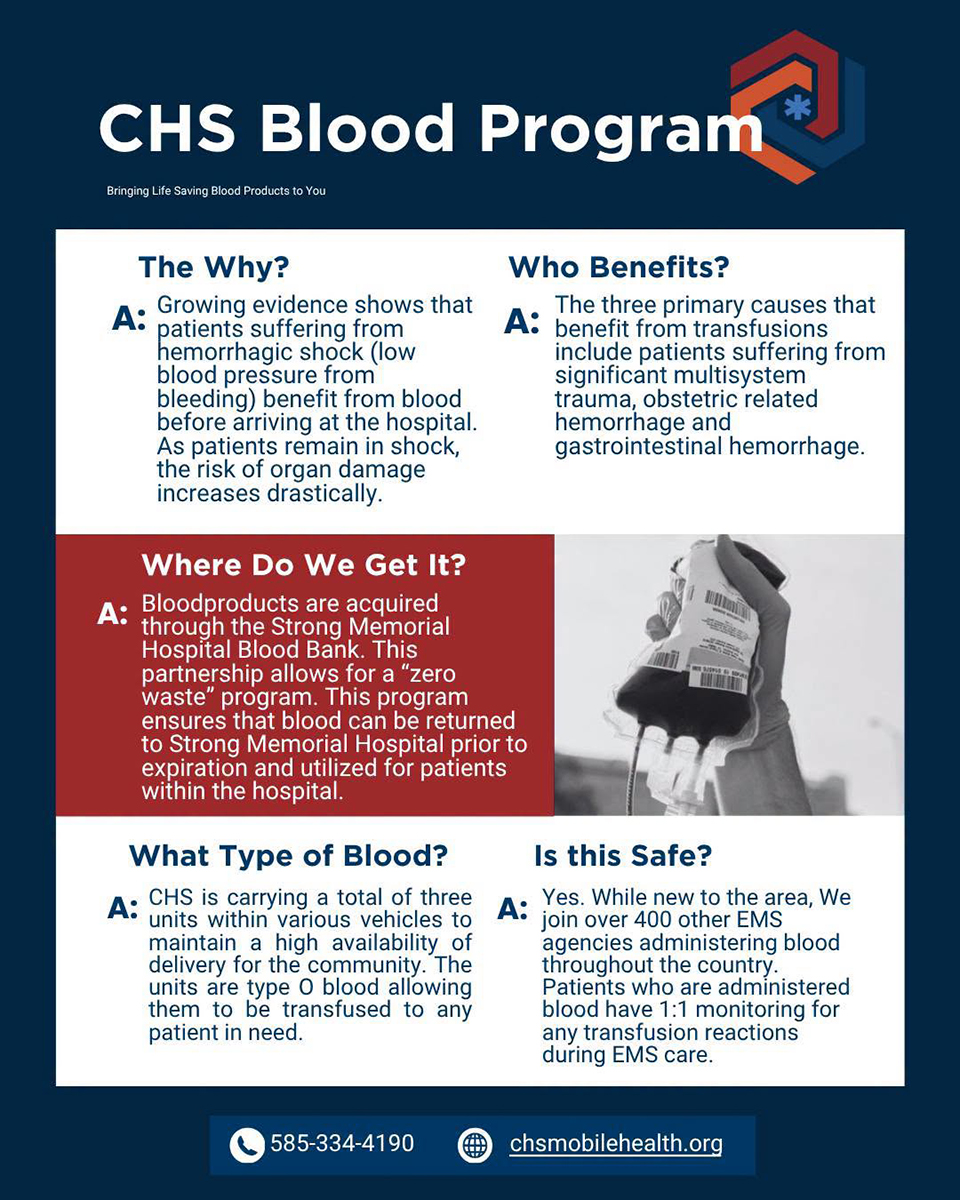
For patients experiencing severe blood loss, every minute matters. Traditionally, blood transfusions begin after a patient arrives at the hospital. With this new capability, CHS paramedics can begin transfusions at the scene of an emergency or while transporting a patient to the hospital, bringing an important component of hospital-level trauma care directly to the patient.
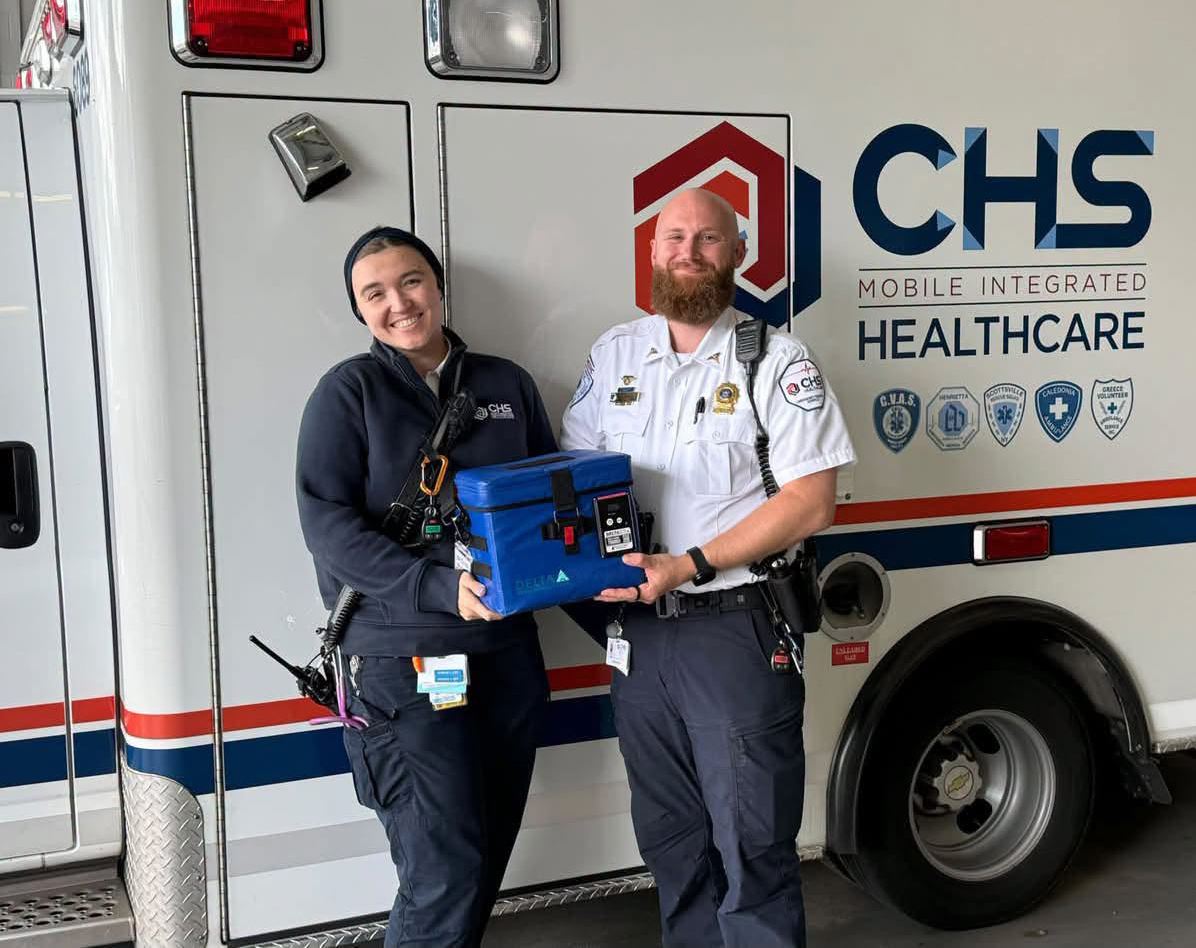
A Zero-Waste Approach
An important part of the program is a “zero-waste” system developed with the University of Rochester blood bank. CHS carries blood for emergency use, but units that approach their expiration date are returned to the blood bank, where they can still be used. CHS then receives replacement units with a longer remaining shelf life.
“We get blood from U of R blood bank. We keep it until there’s about seven days left prior to expiration, we return it to the blood bank, and they will absolutely use it within those seven days, and we will get new units of blood with a longer expiration,” said Frank Manzo, Chief of Operations at CHS. “That was an integral part of this program we came up with, and the blood bank was huge in helping us come up with this plan that we dreamed of over a year ago.”
More Than a Year in the Making
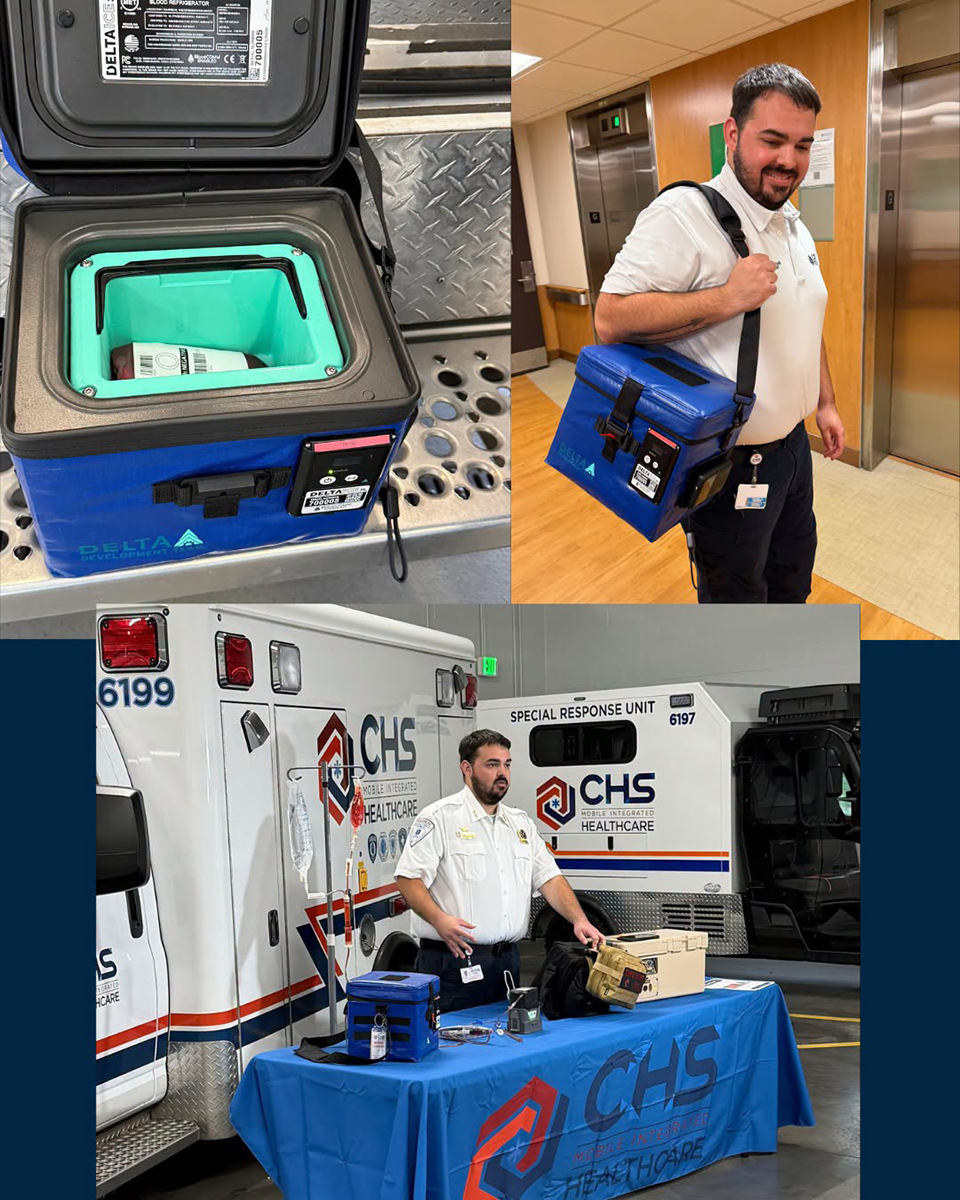
Launching the program required more than a year of planning and collaboration, including extensive documentation, training and testing. Its implementation reflects the work of CHS providers and leadership as well as the support and expertise of the University of Rochester team. Most importantly, it gives CHS paramedics another critical tool when treating patients facing life-threatening blood loss, and allows that treatment to begin sooner, when time can make all the difference.
We’re proud to bring this new capability to our communities and we’re grateful to everyone who helped make the program possible.